
The Basics
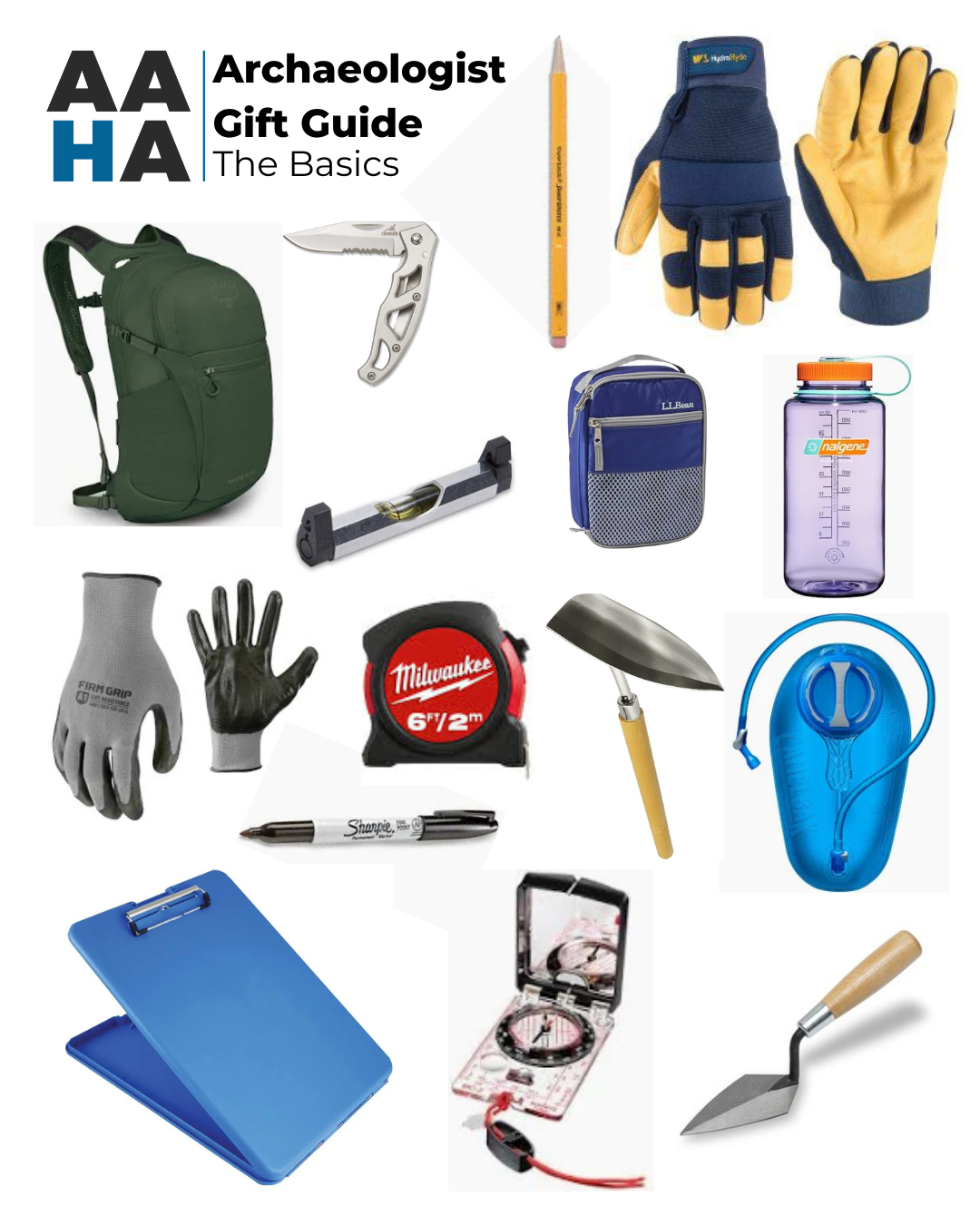
This list covers the basics of personal equipment. Most of these items won’t break the bank and would make great gifts for the new field technician or replacements for the seasoned archaeologist!
- Trowel – THE essential. We prefer the Marshalltown 45 4.5S Pointing trowel, but any 4.5” mason trowel will do. If you want to treat your archaeologist, add on the Marshalltown leather trowel holster!
- Measuring tape – pretty much any handheld measuring tape will work. They do get lost easily, so we recommend the keychain tapes. They’re cheap enough to buy a couple so there’s always one handy. Be sure to ask your archaeologist which measuring units they need!
- Gloves – there’s a lot of options here, and it comes down to personal preference. Heavy-duty leather gloves are the most durable for screening, but their size can make it harder to handle artifacts. Nitrile coated fabric gloves are less durable but provide more dexterity.
- Compass – Not all compasses are made equally. For archaeology, you want a clear baseplate, movable bezel, a sighting notch, and a mirror like the Suunto MC-2G Global Compass
- Clipboard – Any full-size clipboard will work, but a storage clipboard protects paperwork
- Backpack – Look for a backpack with space for a full-size clipboard, water, and your lunch. You’ll also want extra compartments for smaller tools. Other considerations are durability, washability, and back support. Osprey bags are on the more expensive end, but they offer a lifetime warranty for repairs. They shouldn’t need anything much fancier than this.
- Water Bottle – People can be opiniated when it comes to their water bottles. Anything that fully seals is recommended, like a classic Nalgene. If you opt for a water bladder, like a Camelbak, don’t forget the cleaning kit!
- Lunchbox – This is another item with lots of options. Look for something insulated with soft walls that’s small enough to fit in a backpack like this.
- Sharpies and pencils – They’re probably supplied by their company but you can never have too many sharpies. For pencils, mechanical ones are the most efficient in the field. Regular clicky pencils get clogged with dirt, so we prefer the twistable Papermate. Be sure to use #2 lead refills!
- Line level – for the ambitious techs who like to have extras on hand. Look for sturdy hooks, like this Marshalltown one.
- A pocket knife – A simple folding knife is helpful to have on hand to cut small roots
- Japanese triangle hoe– This tool is great for scraping dried out soils on a Phase II investigation.
Wearables
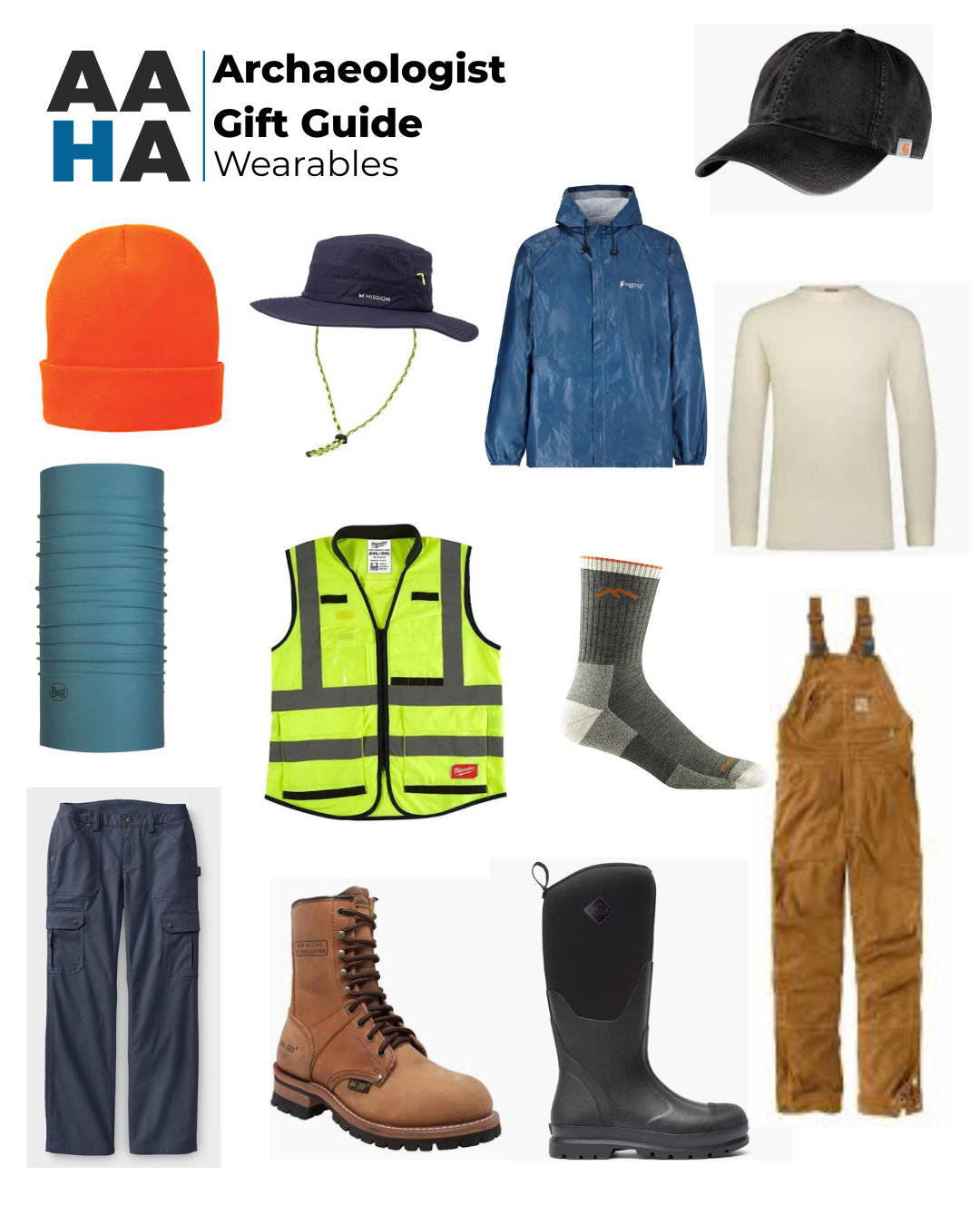
There’s a lot of personal preference with field clothes, but here are some of our favorites.
- Everyday Boots – If you’re going to splurge on anything, it should be on boots. You’re looking for something comfortable, durable, and water-resistant with ankle support. Some of our favorites are Carolinas and Ad Tecs.
- Muck boots – for fully waterproof boots, look for durable muck boots. We recommend the Muck Boot Company, Xtratuf, and DryShod
- Socks – Look for mid to light weight, wool hiking socks like these or these.
- Summer pants – In the summer, you want to prioritize breathability. If you’re going to be in the woods, look for heavy duty canvas. The Duluth Fire Hose line (in men and women) are pricey but worth it. If you’re not worried about getting cut up by brambles, you can opt for any lightweight hiking pant like these.
- Winter pants – In the winter, you want thicker, insulated or fleece lined pants like the Eddie Bauer Pro Lined Pants.
- Layering shirts – There are a lot of options for shirts. In the summer, look for lightweight, moisture-wicking material. This shirt provides UV protection and can be layered under other clothing in the winter. In the winter, look for insulated spandex base layers or classic waffle-knit long johns.
- Safety vest – some companies provide safety vests, but it’s good to be prepared with your own. Prioritize pockets, like this.
- Overalls – Our favorite overalls are Carhartt. They come in regular and insulated varieties for men and women.
- Hats – this is another category where people have a lot of opinions. If your archaeologist is really dedicated to the look, there’s the classic Indiana Jones fedora. But in reality, most archaeologists opt for baseball caps or boonie hats in the summer, and insulated beanies in the winter.
- Rain gear – A light weight, packable rain jacket is nice to have in your bag just in case
Comfort/Safety/Travel
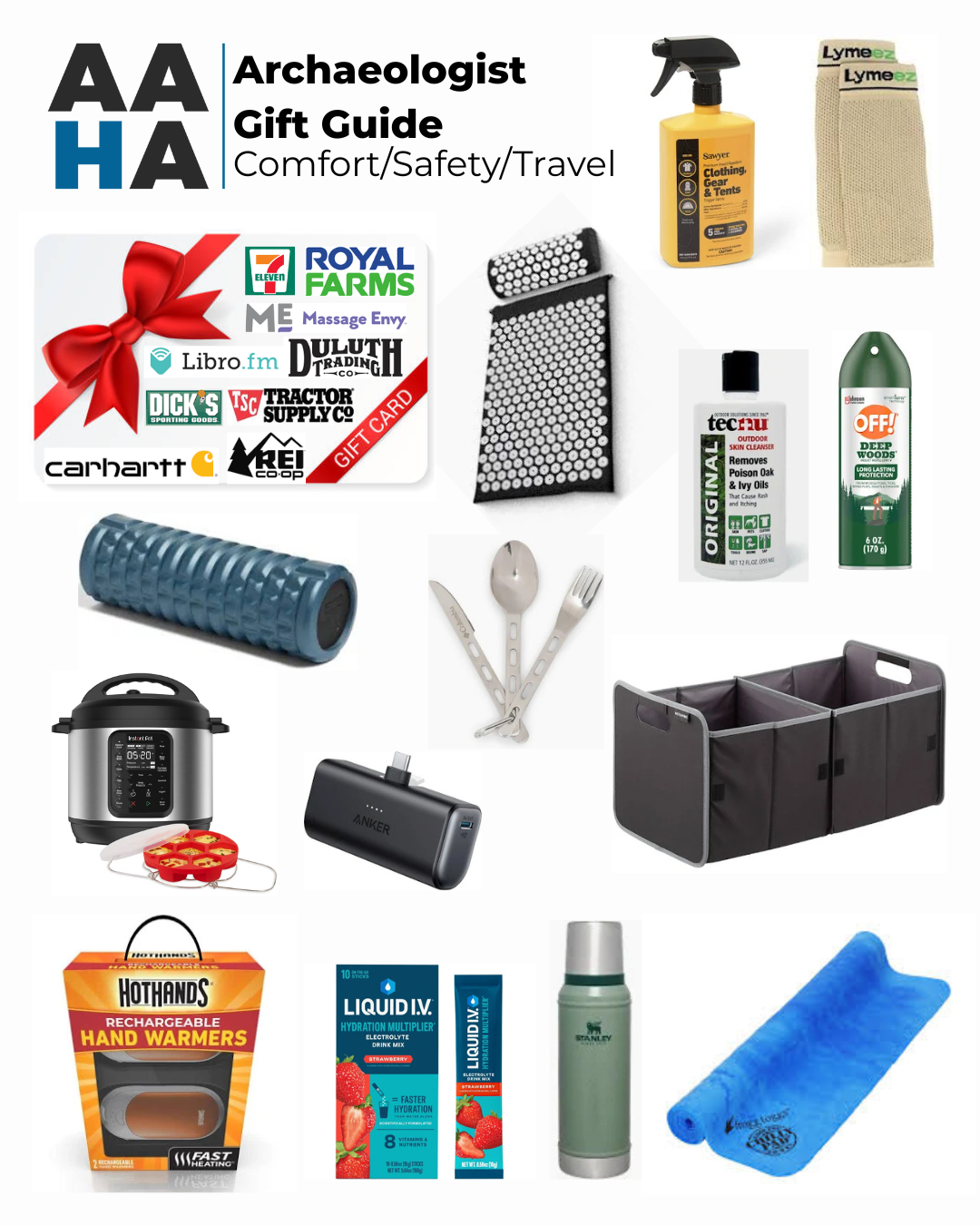
These items make life a little bit better for your archaeologist.
- Sunscreen – Any brand, preferably over 50 SPF
- Permethrin and bug spray – permethrin is used to treat clothes to ward off bugs like ticks. We always recommend having a can of bug spray on hand.
- Tick/chigger gaiters – These are pre-treated wraps that go around ankles to keep bugs and ticks from climbing up pant legs.
- Tecnu – for the poison-ivy sensitive. We recommend keeping a small bottle on hand to wash throughout the day.
- Electrolyte packets – Look for individual packets for extra hydration on the go like the Liquid IV.
- Cooling towel – These are water-activated cooling towels, perfect for those scorching summer days.
- Handwarmers – We recommend keeping these on hand during the winter months. You can buy single-use warmers or chargeable, reusable ones.
- Travel thermos – If your archaeologist is bringing coffee into the field, look for a thermos that fully seals like this.
- Portable phone charger – for long days in the field
- Foam Roller or Acupressure mat – For daily upkeep of aching muscles.
- Trunk organizer – to contain your archaeologist’s field gear and keep their car as civilized as possible
- Insta pot/rice cooker – more hotel meals = more per diem saved
- Portable utensil kit – for lunches in the field or dinners in the hotel
- Audio book subscription – to keep your archaeologist occupied while traveling. Libro.fm partners with indie book stores. You can gift credits or specific books.
- Gift cards – If you don’t want to purchase any of these items, consider buying gift cards to sports outfitters like Dicks or REI; gas stations for when they’re on the road; or even massage or acupuncture studios for their sore muscles.
