It may seem like our job is about digging holes to find artifacts, but there’s actually more involved in our excavations. What separates us from metal detectorists and hobbyists is a broad collection of data about the site as a whole, including the soil where the artifacts are found. For this, we use smaller handheld tools that give us more precision.
The Mason Trowel
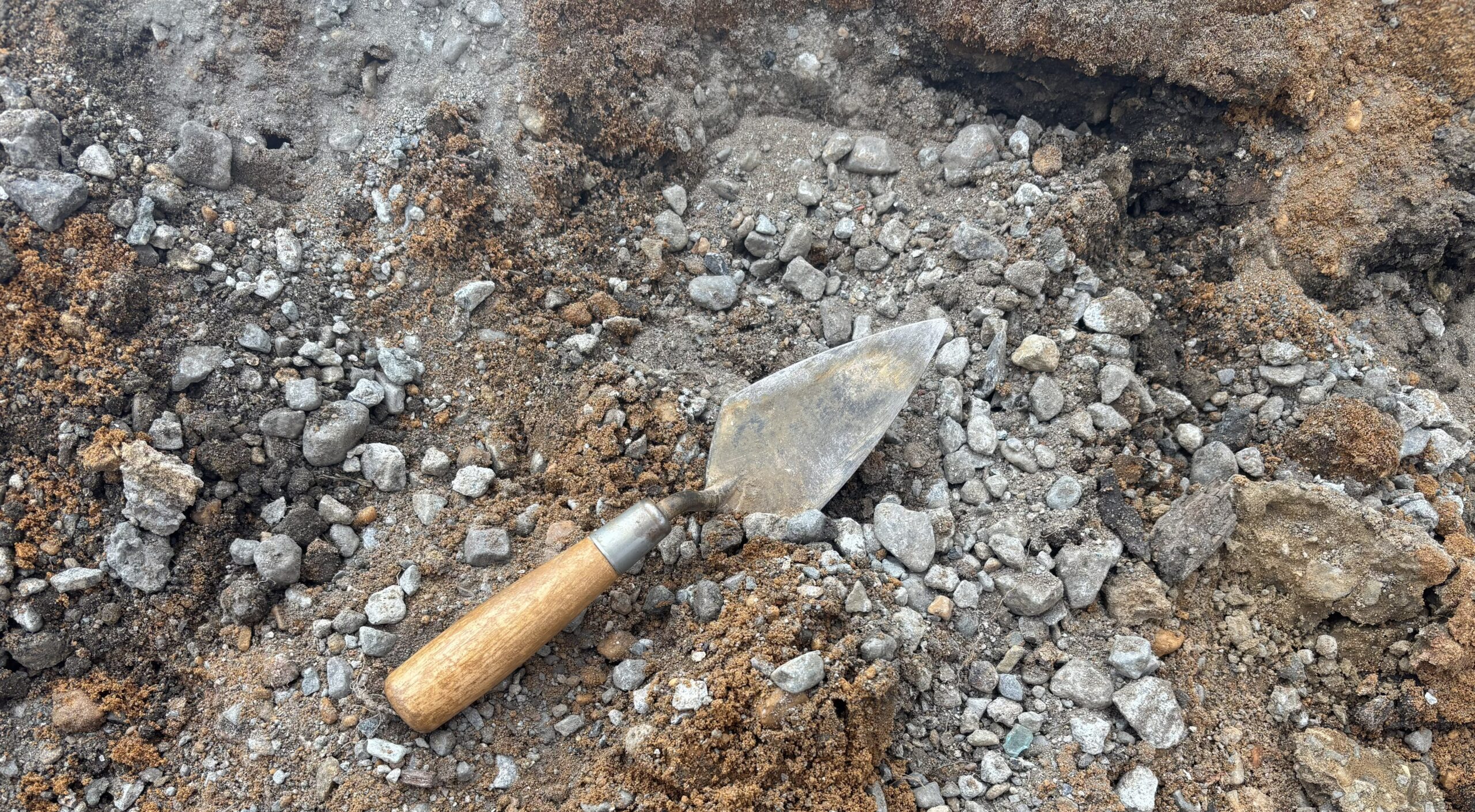
When it comes to an archaeologist’s personal tool kit, the trowel is probably the most common item you’ll find. Rather than digging, trowels are used for scraping small amounts of soil. This can be helpful to scrape the surface of the soil to better see the stratigraphy (layers of soil), or to clean up artifacts left in situ (left in place).
Cleaning up Stratigraphy
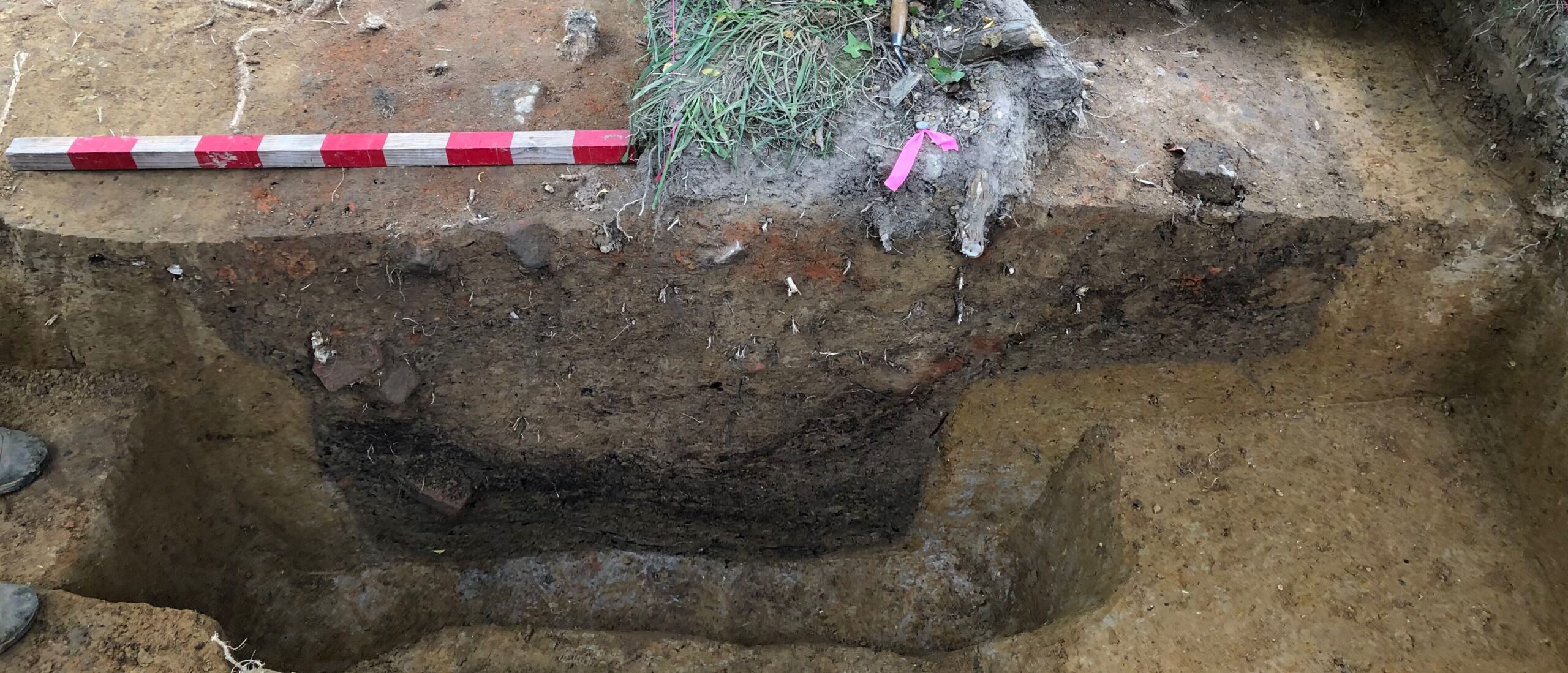
While the artifacts are the exciting part of the job, the dirt is equally important. If you dig a hole with a flat wall, you’ll see that soil is naturally stratified into layers of different colors and consistencies. These layers are called strata. As we dig, we isolate each stratum at a time so we can identify exactly where the artifacts came from. Man-made manipulations also leave their mark and are identified by changes in color and soil consistency. These are often identified as archaeological features.
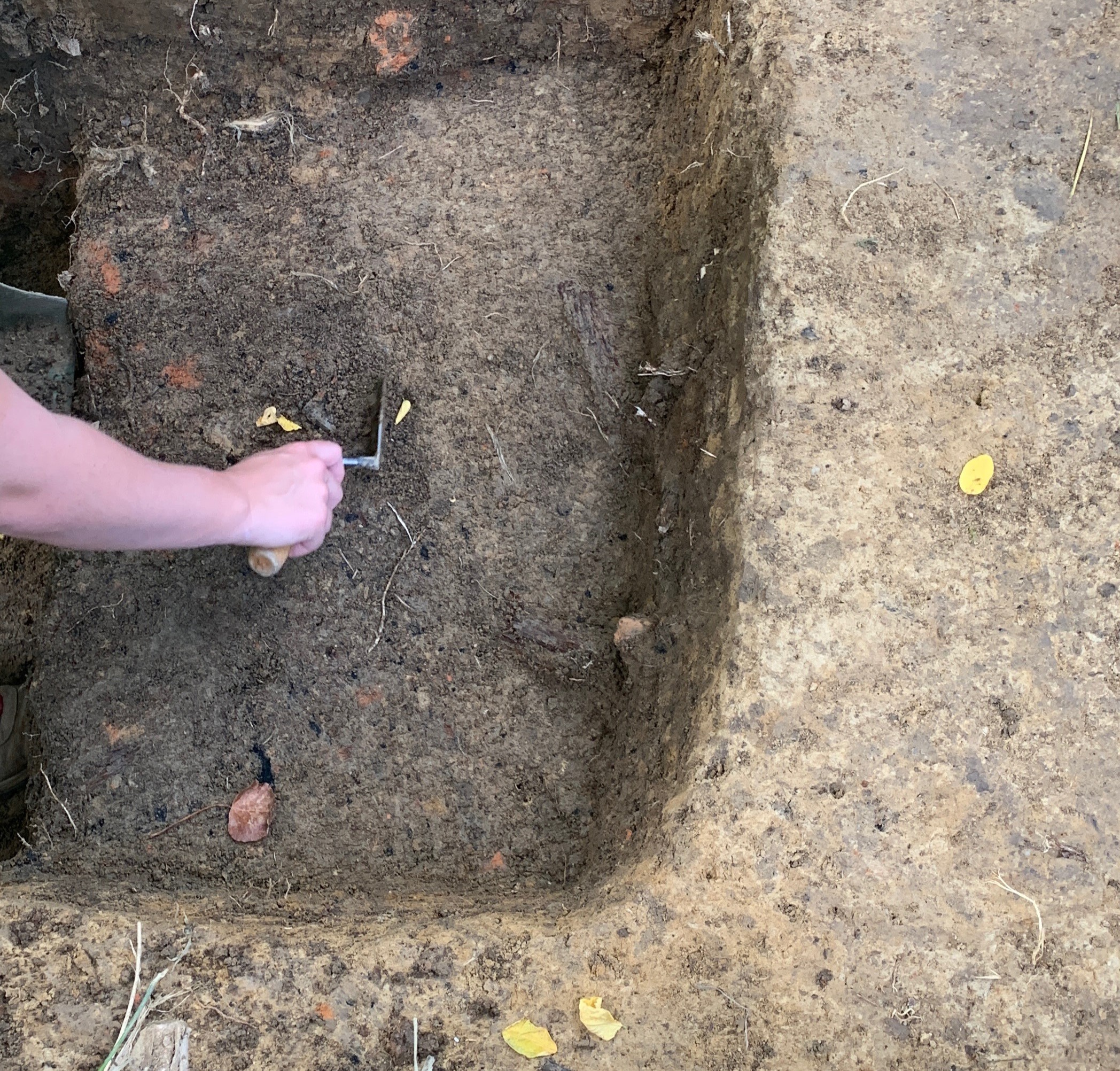
As you dig down in a test unit, your shovel can make flat walls, but it will also smudge the soil around on the surface. We use our trowels to come back and scrape the surface to better highlight the stratigraphy. Similarly, we can scrape the floor to identify where the soil changes between strata or features.
Artifacts In Situ
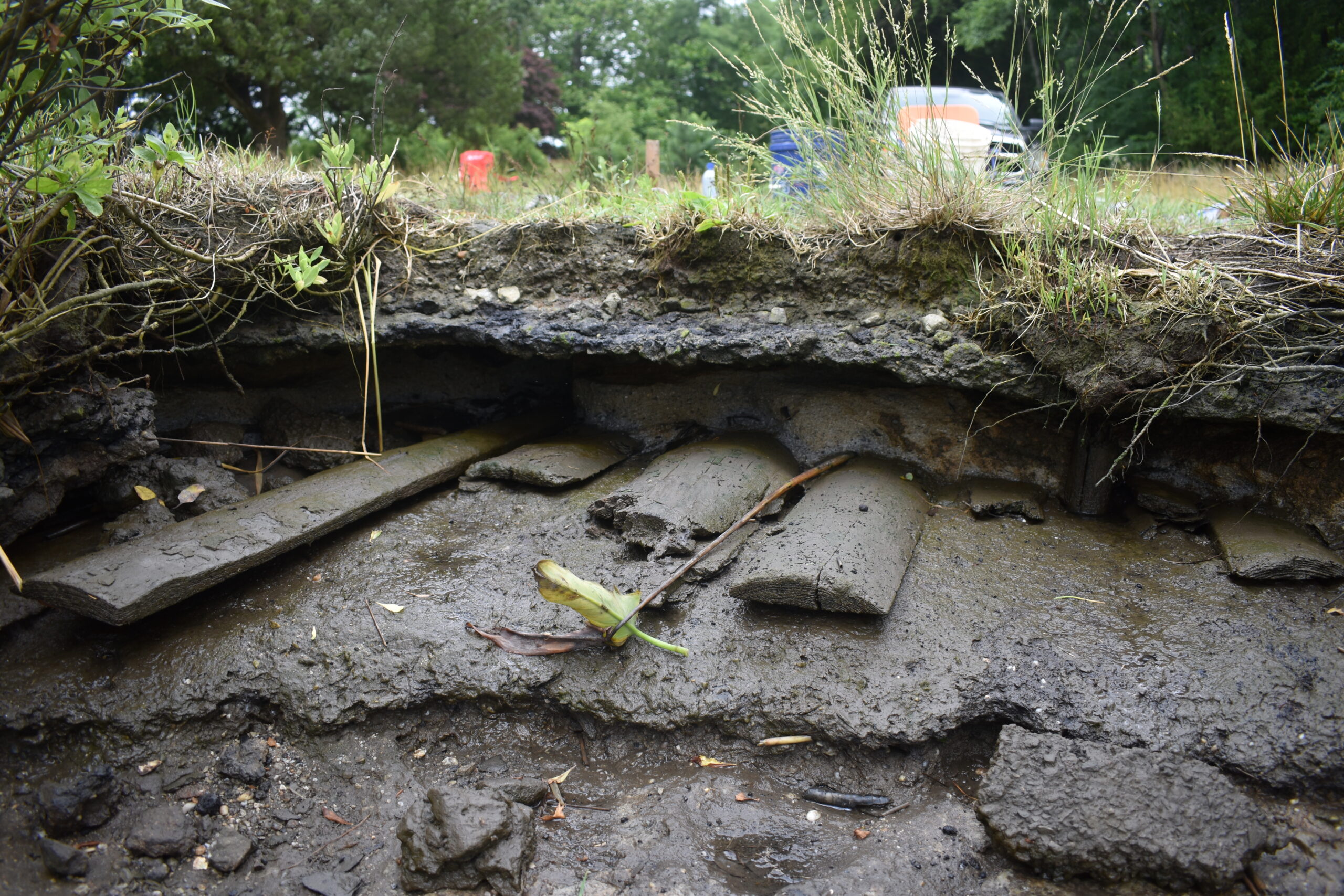
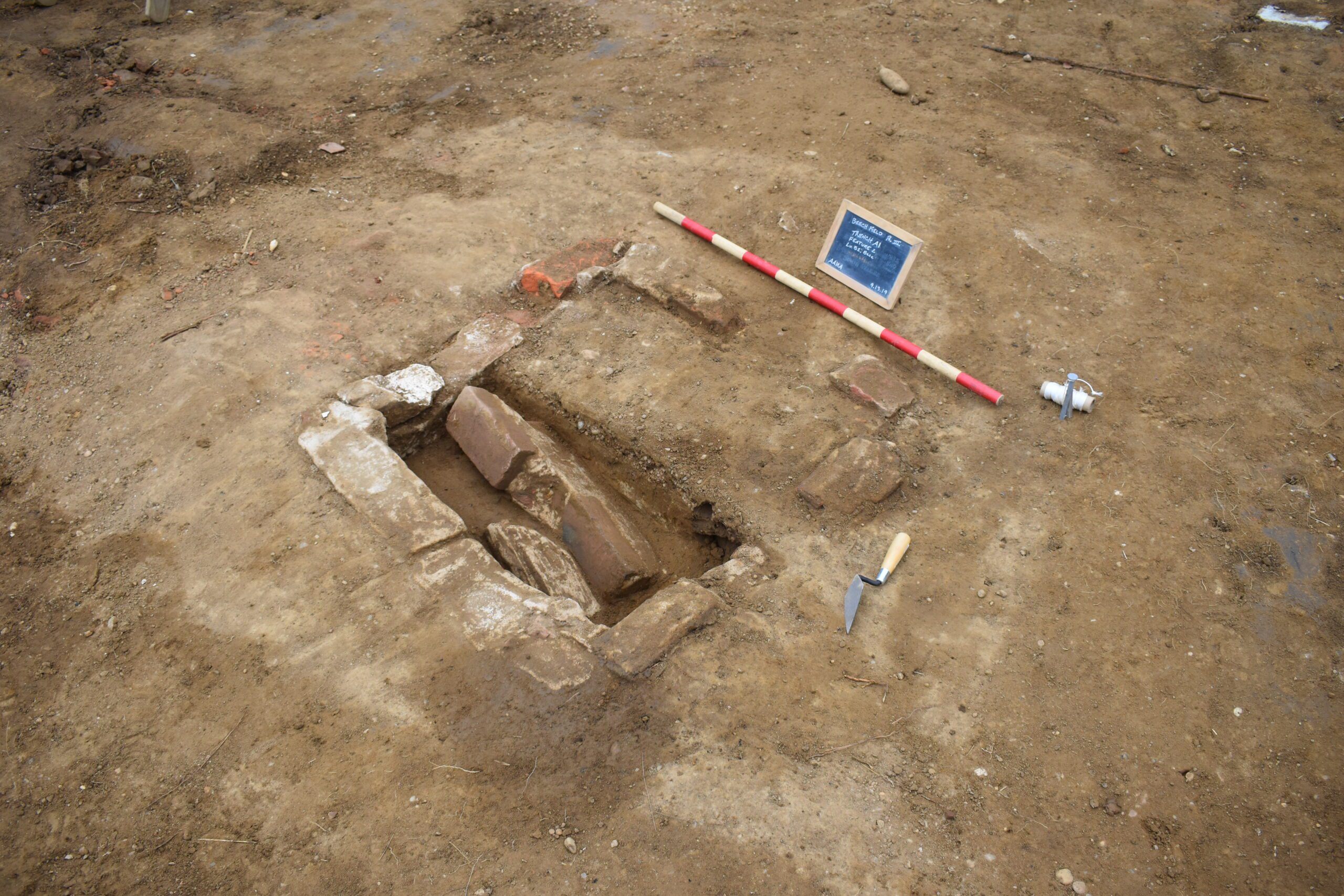
Sometimes it’s important to document an artifact in place. This is usually when an artifact is in its original location, like a foundation or a walkway. Along with brushes, trowels help us to carefully remove soil away from these artifacts to map and photograph them. After these artifacts have been fully documented we can carefully remove them, although sometimes we still choose to leave them intact.
Honorable Mention: The North Arrow
As a small, pointed object present at every survey, the trowel is often used as a make-shift north arrow to orient our photographs.