
Have you been calling a spade a spade?
Depending on where you are and who you ask, there are some conflicting terms for shovels and spades.
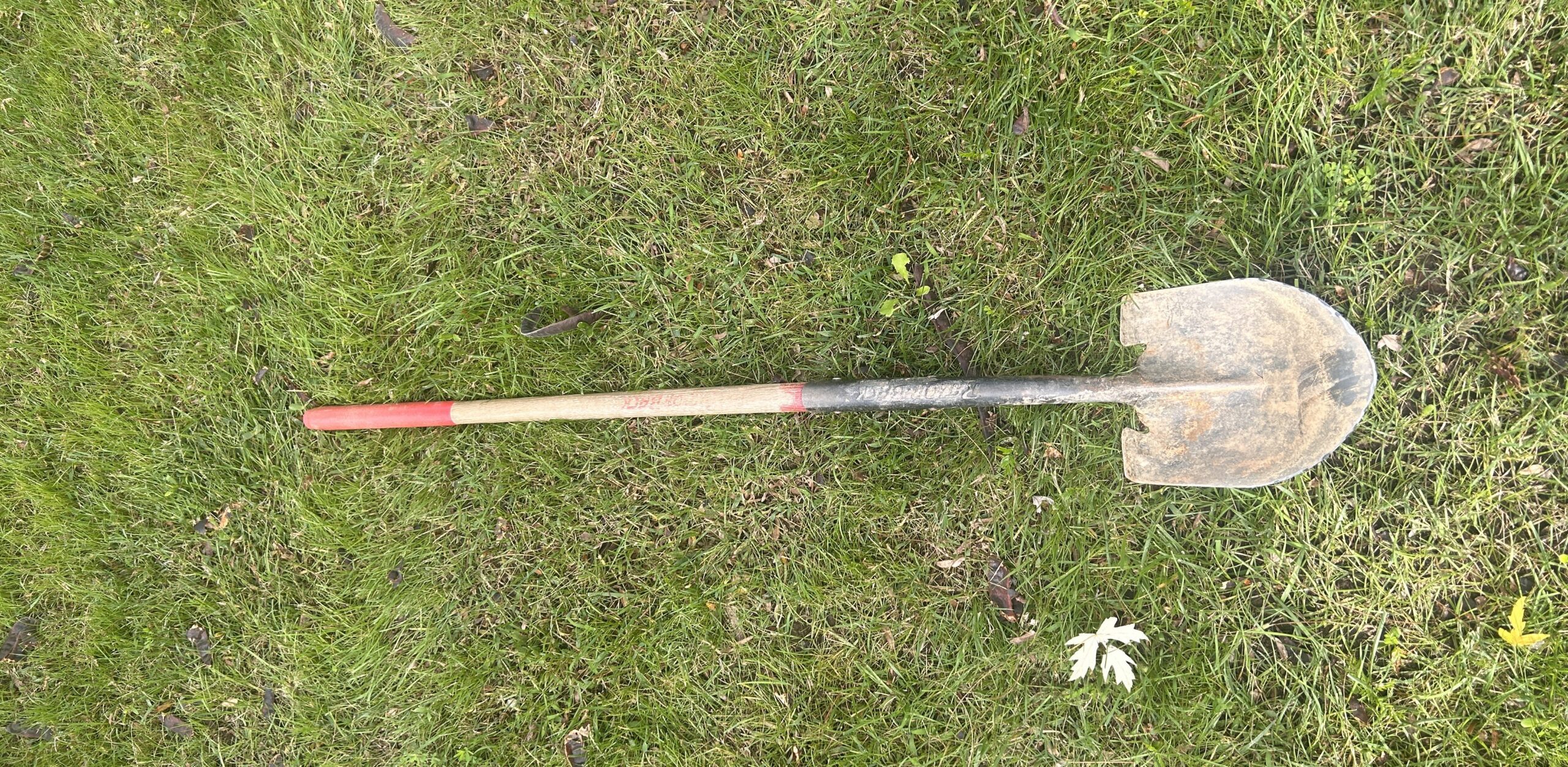
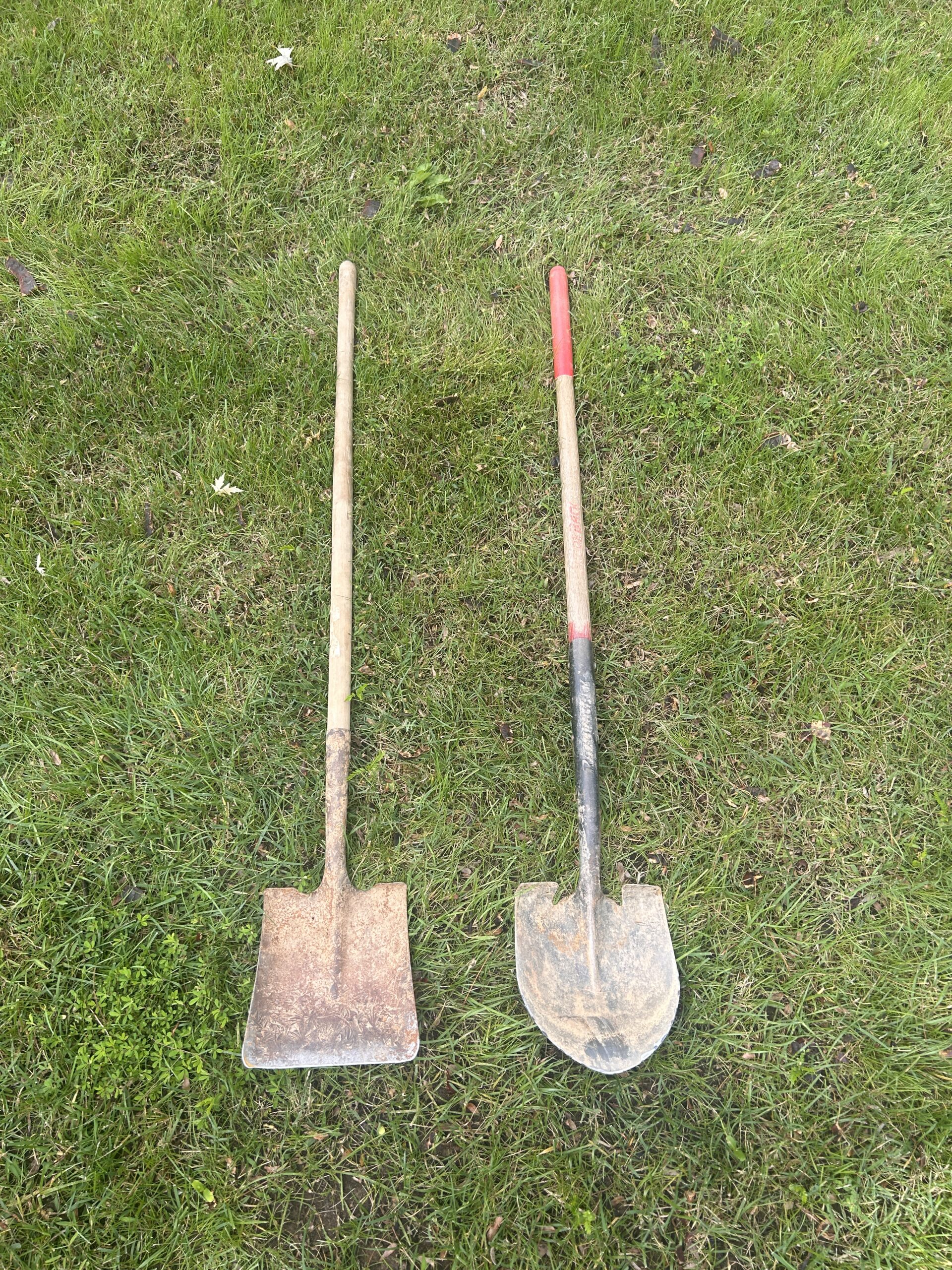
Shovels: Shovels are multi-purpose tools with long handles and wide blades with deeper bowls. They are designed to scoop and move earth. They come in different shapes, but we primarily use round-headed shovels and square- or flat-headed shovels.
In archaeology, we use round-headed (or round point) shovels to dig Shovel Test Pits (STPs) during Phase I archaeological surveys. Most simply, round-headed shovels allow us to easily dig a round STP, as is typically required in the Mid-Atlantic region.
We use flat-headed (or square point) shovels to dig Test Units (TUs) during a Phase II archaeological investigation or Phase III archaeological data recovery. Test units are typically square and are excavated in controlled levels. Flat-headed shovels allow us to create straight walls and slowly remove soil. The slow removal of soil is particularly important to keep soil strata (soil layers) separate and better identify where artifacts come from.
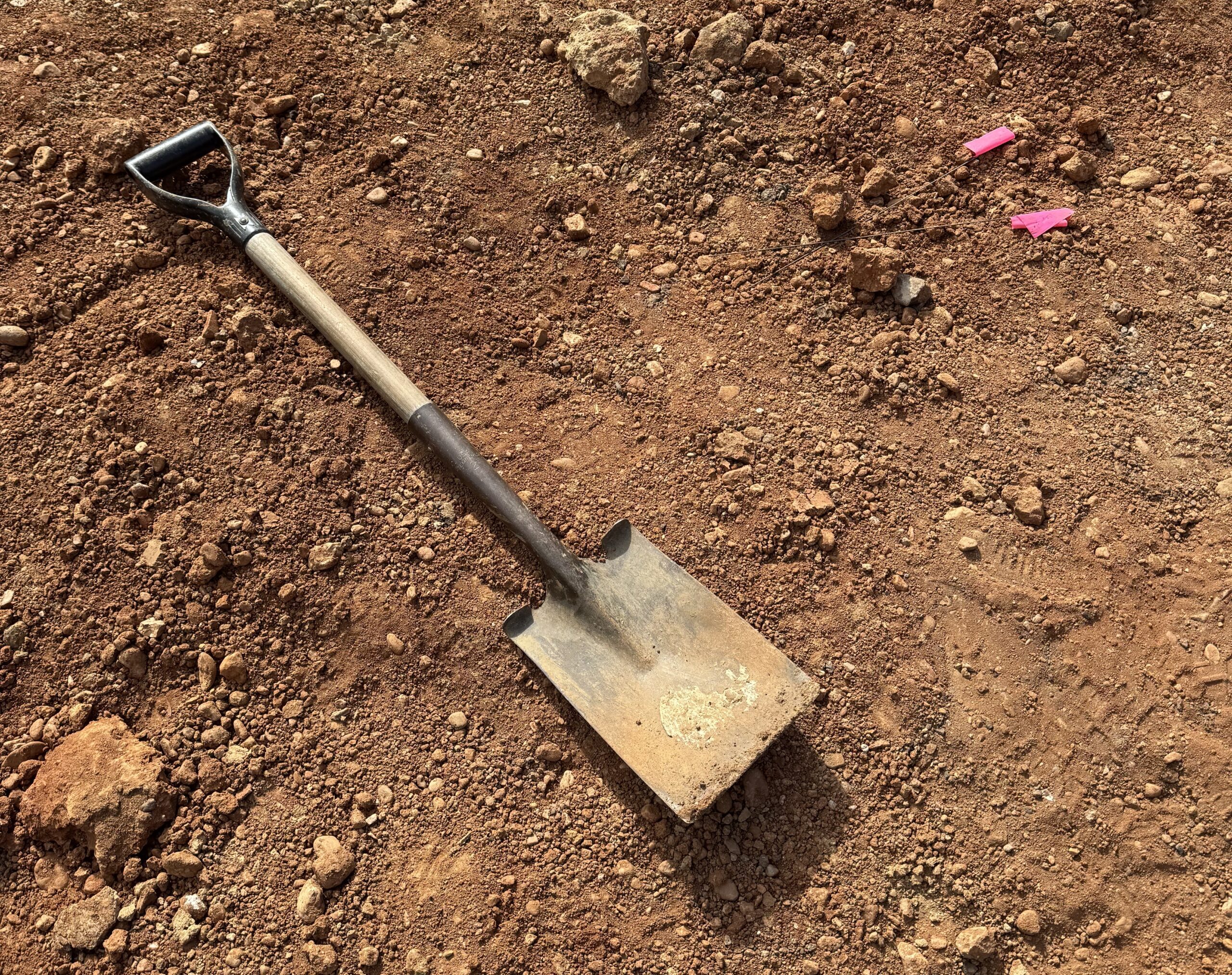
Spades: Spades are long-handled tools with narrow, flat blades. They are designed to cut with precision.
Like a flat-headed shovel, we use spades on Phase II and Phase III surveys. Spades are helpful to create straight walls and flat floors in our test units. Due to their smaller size, spades are useful to dig smaller exploratory windows in test units.
