At last, the final step in the lab process: Curation! While laws concerning ownership and final disposition of artifacts vary from state to state, most artifacts collected during an archaeological investigation are stored at a curation facility. These facilities provide a climate-controlled storage area where artifacts can be accessed by future researchers. Most states have a dedicated curation facility for all collections from the state while some states spread their artifact curation amongst local museums. Even some counties and cities have their own facilities, such as Anne Arundel County in Maryland and Loudoun County in Virginia. Regardless of where the artifacts wind up, all collected artifacts are prepared for final curation.
Every state, county, and museum have their own curation guidelines. These describe the condition the collection must be in to be accepted for curation. While these guidelines share many similarities, there are a lot of minute details that can lead to big changes in the way artifact post-processing is conducted. When you work in several states like we do, it can get confusing fast. The following describes an overview of artifact post-processing and curation prep for collections to be submitted to the Maryland Archaeological Conservation Lab (MAC Lab) in St. Leonard, Maryland’s primary curation facility (Maryland state guidelines).
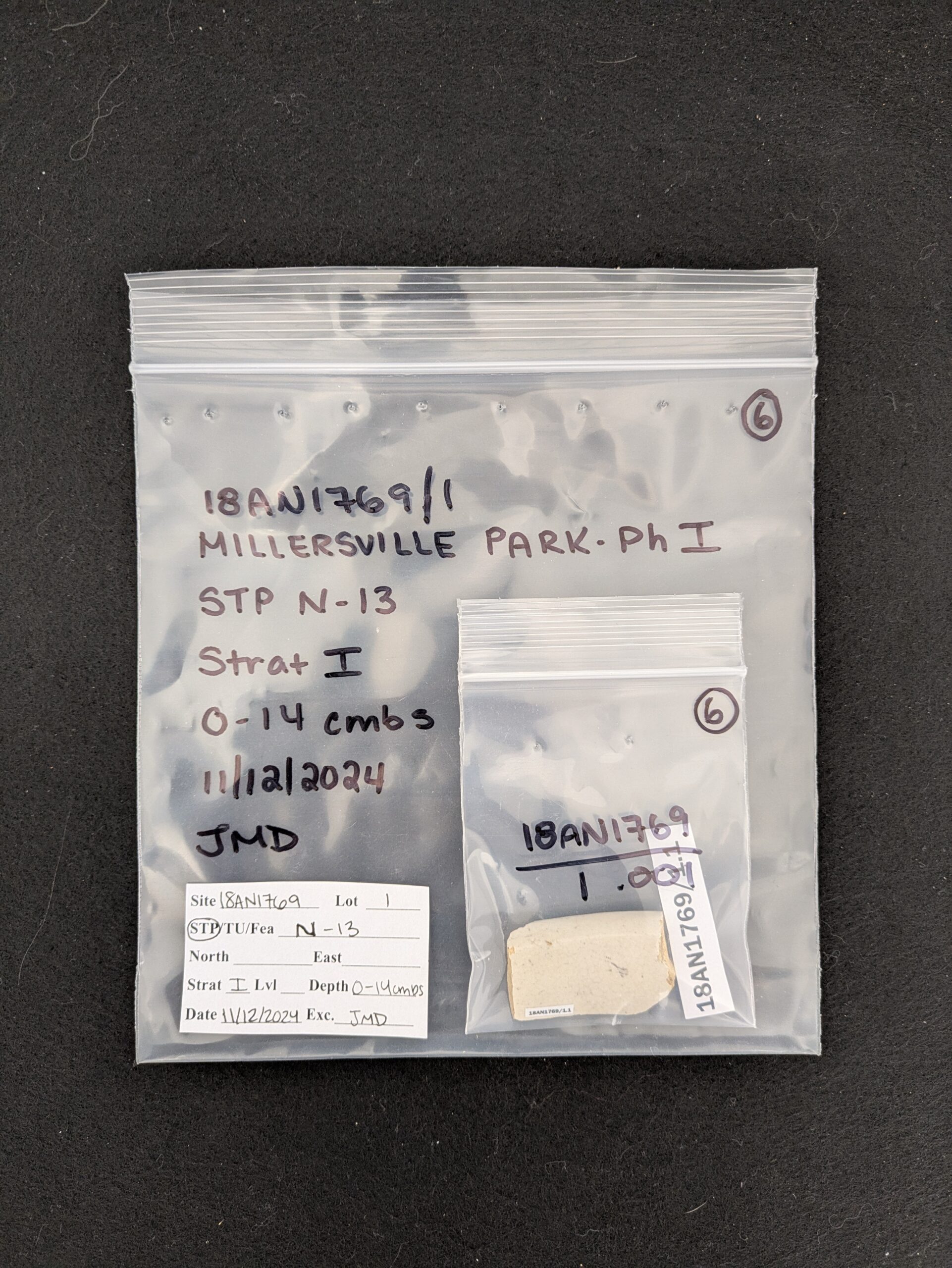
What’s the number one rule in the lab? PAY ATTENTION! This is particularly important in the post-processing step. After artifacts are cataloged and have their site and Lot numbers, they get tagged and labeled. All of the main provenience bags have their provenience information written in sharpie (ideally legibly) while the catalog bags that make up the provenience have the Site Number, Lot Number, and artifact Catalog Number. Those main provenience bags get a paper tag that includes all the provenience information while the individual artifact bags get a paper tag that includes the site number, Lot number, and artifact Catalog number. I know it’s redundant, but we all know that permanent marker is anything but permanent. Also, remember, we THRIVE on redundancy!
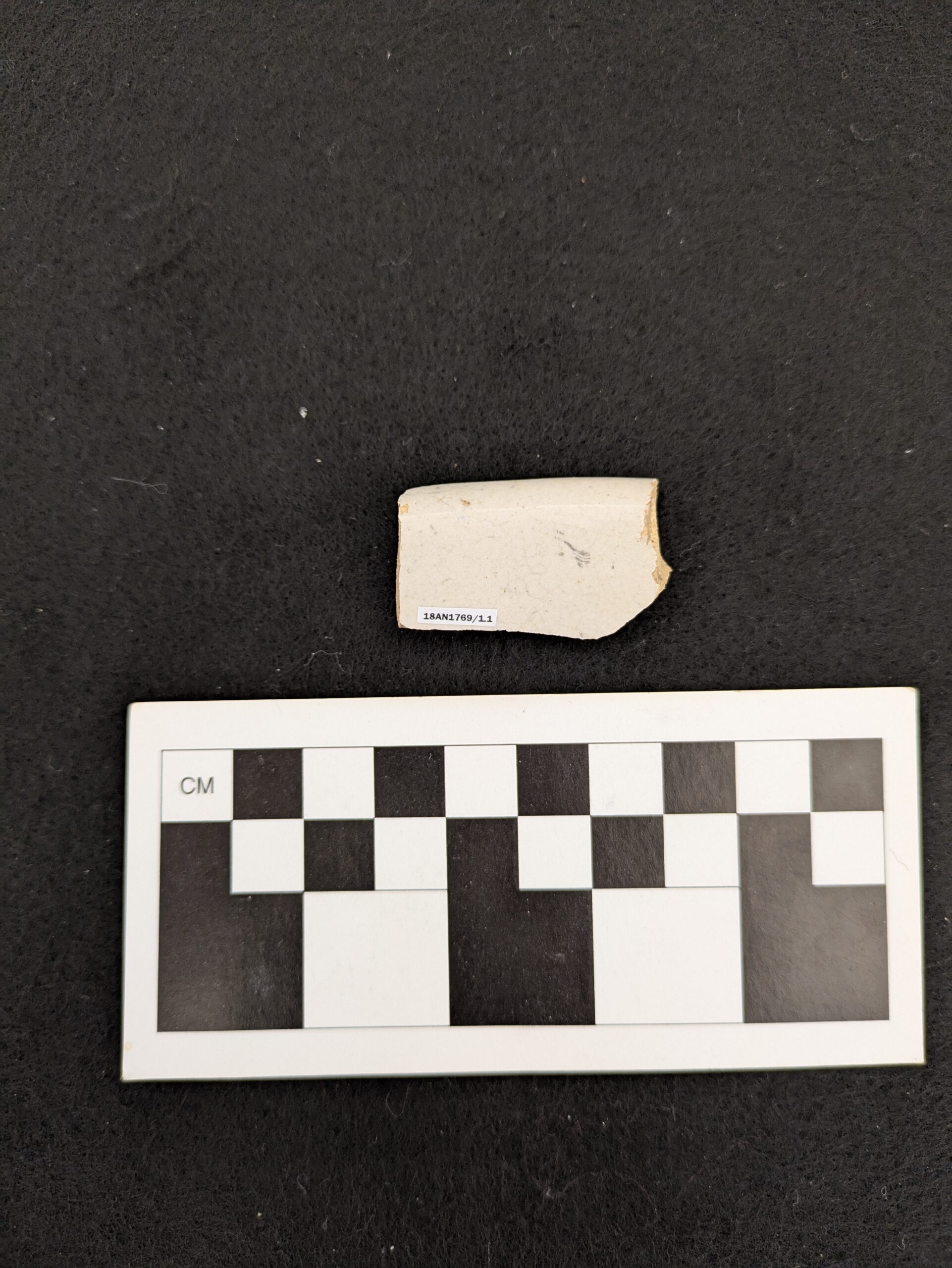
Once the tags are done we move on to artifact labeling. This is our third level of redundancy. In case the artifacts manage to lose their bag and tag, putting a label directly on the artifact means we will always know where it belongs. This is particularly important for artifacts that will be pulled for special analysis or exhibition. Think of tags as a dog collar and labels as a microchip. This task used to involve putting a layer of clear lacquer (such as a chemical called B-72) on a portion of an artifact, letting it dry, writing the Site Number-Lot Number-Catalog Number in extremely tiny writing by hand, letting it dry, applying a second coat of B-72, and letting it dry before re-bagging it. While some curation facilities still require hand-written labels, most have thankfully moved on to tiny, printed labels adhered to the artifact with a special type of glue. While this method does present its challenges (such as managing the smaller-than-confetti sized labels), it does remove the main problems with the hand-written method which of course is poor handwriting.
Once all of the artifacts are tagged and labeled, they’re triple-checked by the Lab Director (see, redundancy!) and if everything looks good post-processing of the artifacts is complete. The bags are organized by site and placed in a nice new Hollinger box. Now we turn to documentation!
Curation facilities typically require all the information gathered during the field and analysis process. For MAC Lab, this includes the original field records (hopefully not too dirty), complete artifact catalogs for all sites, a detailed photo log for field photos, and the final report. They also require a signed Deed of Gift from the landowner transferring ownership of the collection to the state. Once we have all the necessary paperwork, we get in touch with MAC Lab to schedule a transfer. Typically, it is stand-off style, where they grab the artifacts while I grab the collection submittal receipt and we all slowly back away. Once the artifacts are accepted for curation, the process is complete. That’s it. The last step of many (I’m sure you’re thinking “too many”) is finally complete, the report is written, the artifacts are home, and we can move on to the next project.
Thank you for joining me on this long journey through the Lab!
Disclaimer: This post describes curation requirements at one facility as of October 2024 and is intended to convey generation information about the curation process. It is not intended to serve as instructions for getting every archaeological collection ready for curation. If you have an archaeological collection that needs to be curated, contact the appropriate curation facility for their most current requirements and guidelines.